
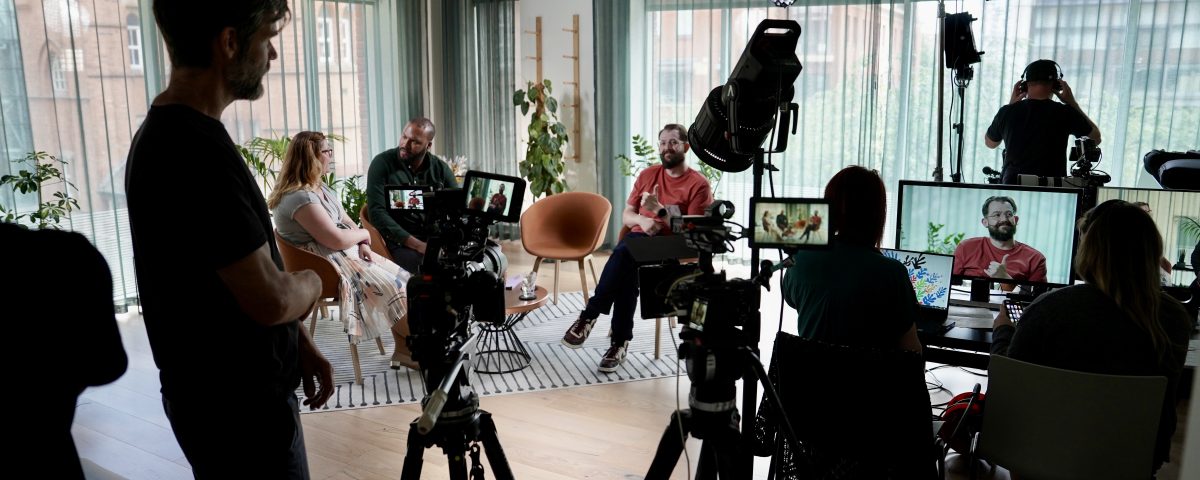
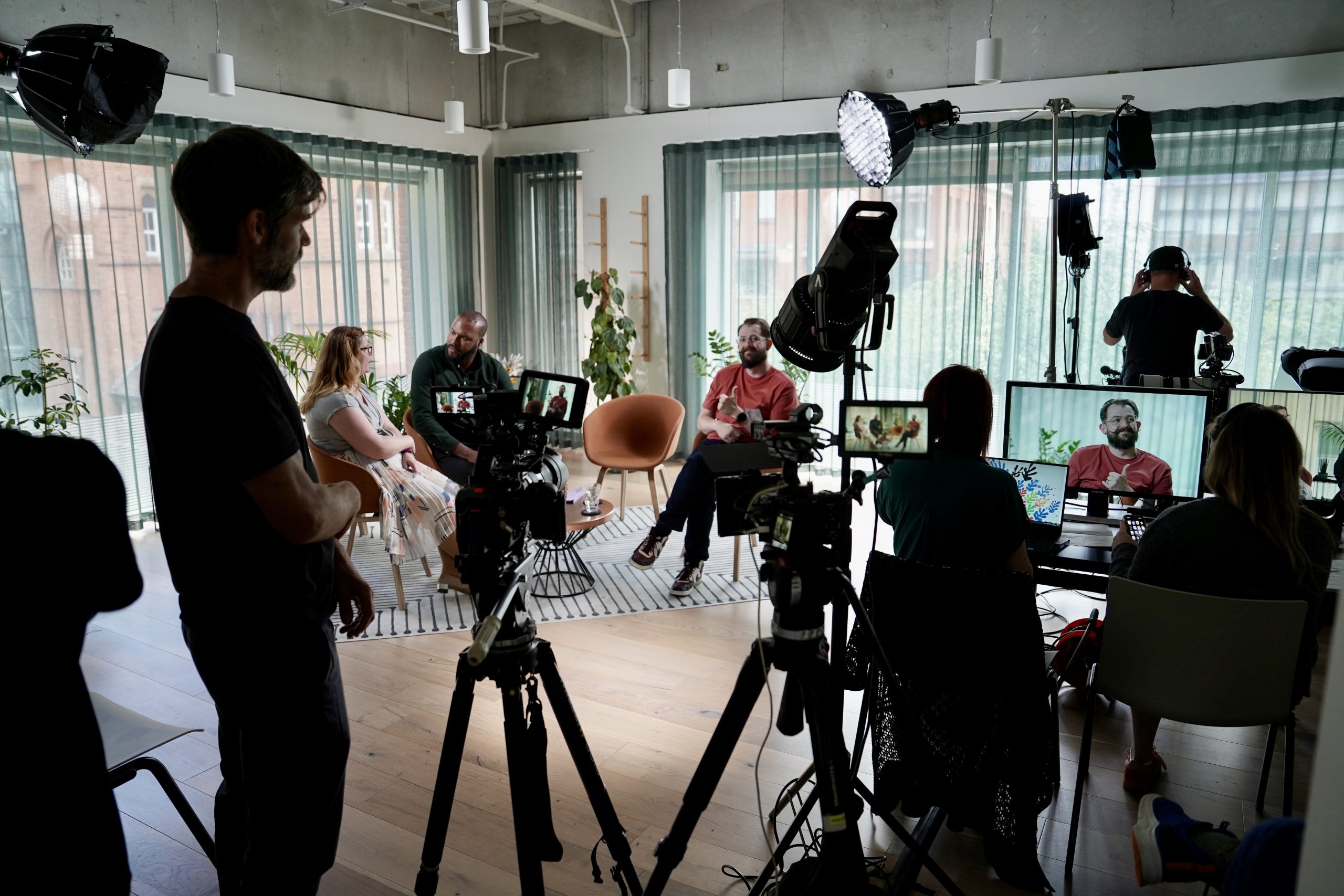
Behind the scenes of a video podcast recording for a purpose-led campaign — one of the formats shaping campaigns in 2026.
Reach to Relevance: The Challenge for Purpose-led Campaigns in 2026
In 2026, the challenge won’t be getting campaigns seen. It will be creating work that people choose to spend time with. And for charities, health organisations and changemakers, this shift will be particularly acute. Attention isn’t just scarce, it’s increasingly tied to trust, ethics and responsibility.
Here’s the mindset shift we’ll need to make: audiences aren’t disengaged, they’re discerning. As AI becomes more prevalent, people are quicker to sense what feels authentic or useful, and what’s worth their emotional energy. In the year ahead, and for mission-led organisations especially,campaigns will need to earn attention through care, clarity and credibility, rather than volume.
At MOREVER, we believe 2026 marks a quiet but significant shift. Not a reinvention of platforms or tools, but a considered rethink of how campaigns are made, who they’re made for, and the role creative work plays in people’s lives.
Here are four changes we see shaping campaigns in 2026. We’ll be keeping these front of mind as we move through the year, ensuring our approach to campaign strategy, and our core service areas of film, photography, animation, podcasts and interactive experiences, reflect these changes as they unfold.
1. From representation to participation
Predicting a pushback against AI-driven content and a renewed appetite for “real” authenticity is no longer news. What feels more significant is where that shift is taking place.
We’re not just seeing changes in tone or style, but a shift in the foundations of campaign creation, influencing how work is conceived, produced and shared.
There’s no getting away from the fact that the most effective campaigns will feel human-centred because they genuinely are. Driven by real insight rather than guesswork, and shaped by lived experience rather than surface-level relatability.
What this looks like in practice:
Contributors will increasingly be collaborators, not just subjects. Campaigns will be built with people rather than simply about them, not scripting or feeding words into contributors’ mouths, but involving them meaningfully at the ideas stage.
We’ve already moved in this direction in our own work. Our campaign for Haven House Children’s Hospice is a clear example. What surprised us wasn’t just the change in tone, but how involving contributors early reshaped the structure and messaging of the campaign and has led to wide-reaching conversations about authenticity.

2. Experiences will become baked into campaigns
Five years on from the pandemic, we’re rediscovering the value of being together. Live events and experiences are popping up everywhere, from in-person podcast recordings and community Meetups (e.g. the MOREVER Meetup) to branded experiences like the Taskmaster Experience, which Senior Producer Tom can personally recommend.
Purpose-led campaigns will follow suit. More organisations will hand over part of the storytelling baton to in-person activations, creating moments that are shared, participatory and memorable. When done well, these experiences don’t replace campaign content; they enrich it, generating stories, conversations and assets that live far beyond the event itself.
3. AI Aware audiences becoming more selective
In 2026, traditional audience segmentation will feel increasingly blunt. Campaigns will succeed or fail less on demographics, and more on trust, values and emotional alignment.
One of the clearest emerging fault lines will be how different audiences feel about AI-generated and AI-assisted content. This won’t be a simple divide. It will be contextual and nuanced.
What this looks like in practice:
AI acceptance becomes a meaningful audience segment
Some audiences will welcome AI when it improves accessibility, clarity or personalisation. Others will disengage if they sense automation where empathy, lived experience or human judgement is expected.
Context matters more than capability
An audience might accept AI in an interactive explainer or data-led animation, while rejecting it entirely in a fundraising film built around personal testimony. Knowing where AI belongs — and where it doesn’t, will be crucial.
Transparency becomes a trust signal
Audiences will increasingly expect clarity about how content is made. Being open about the role of AI will form part of ethical, credible storytelling.
Human-created content becomes premium
As AI-generated content becomes more common, work shaped by human insight, empathy and craft will feel more valuable, not less.
Emotional intelligence outweighs novelty
By 2026, audiences will be less impressed by what technology can do, and more attuned to whether it’s being used with care.
4. Formats will require a rethink
The future of campaigns isn’t about chasing the next format or platform. It’s about designing work that can live meaningfully across many formats without losing its emotional core.
In 2026, the strongest campaigns will be modular by design, built around a clear narrative spine and adapted intelligently for different audiences, platforms and moments.
What this looks like in practice:
Evergreen, search-friendly content across formats
Campaigns will be designed to last. Long-form video, podcasts, transcripts and supporting editorial content will work together to answer real questions, reflect natural language, and build long-term visibility through search and discovery.
Video podcasts as a core campaign format
Video podcasts will increasingly become the norm, and a powerful way to build trust and sustained engagement. Combining the intimacy of conversation with the craft of film, they’ll play a central role within many campaigns, and we’ll see more organisations vying to create the flagship podcast for their industry (for example, Hubspot’s Marketing Against The Grain). Rather than standalone outputs, these will anchor campaign ecosystems, feeding short-form video clips, photography, pull-quotes, editorial content and social storytelling over time.
Short-form video as an invitation, not a summary
Social-first films are moving away from trying to say everything at once. Instead, there will be more thought put into sparking curiosity, posing questions and inviting audiences into the longer story, rather than compressing it into 30 seconds. Waitrose did this brilliantly over Christmas with their BTS moments of Joe Wilkinson in rollers, and other ‘side-stories’ to the main advert.
Animation and motion for clarity and care
Animation will play a growing role in explaining complexity, internal or emotional states, and protecting anonymity. It will be the tools of choice, not just for novelty, but for sensitivity and understanding. We’re ahead of the game here. Our 2025 animation for Young Lives vs Cancer, Sam’s Story, was designed to reflect the experiences of ‘every young person’ with cancer in a highly relatable way.
Interactive layers that invite choice
Chapters, transcripts, clickable resources and interactive storytelling will allow audiences to dig deeper and engage at their own pace, deepening trust and accessibility.
In 2026, the formats that matter most won’t be the ones people consume fastest. They’ll be the ones people choose to stay with.
Looking ahead
The most effective campaigns of 2026 won’t be louder or more complex. They’ll be more considered.
For charities and changemakers, this is an opportunity to create work that respects people’s intelligence and builds attention that lasts, fewer campaigns built for moments, and more built for relationships.
At MOREVER, we believe the future belongs to campaigns that are emotionally intelligent, ethically made and creatively ambitious. Work that reaches for more, and thinks well beyond the moment it’s first seen.
To make this practical, we’ve pulled together a simple checklist. Don't think of it as a rulebook, but as a way to sense-check your thinking as you plan for the year ahead.
Your 2026 Purpose-led Campaign Checklist
Before launching your next campaign, ask:
Audience & trust
- Do we understand our audience’s values, not just their demographics?
- Have we considered how different audiences may respond to AI-assisted content?
- Are we being transparent about how this content is made?
Authenticity & participation
- Are contributors meaningfully involved, not just represented?
- Is lived experience shaping the idea from the start?
- Have we prioritised contributor care and ethical production?
Creative approach
- Does the work leave space for real moments and emotional nuance?
- Are we resisting over-explanation in favour of trust?
- Have we chosen formats for what they enable, not just where they appear?
Formats & longevity
- Is there a clear narrative spine connecting all formats?
- Are we creating content that can live beyond a single campaign moment?
- Could long-form formats like film or video podcasts deepen engagement?
- Have we designed assets that can be repurposed over time?
Impact & relationships
- Is this campaign building a relationship, not just reach?
- Would we choose to spend time with this content ourselves?
- Does it reflect the values we want to be known for?
If any of this has sparked questions or reflection, we’re always happy to talk, whether that’s sense-checking an idea, sharing what we’re seeing across the sector, or exploring what a more considered campaign could look like for you.
Reach for more. Think forever.